
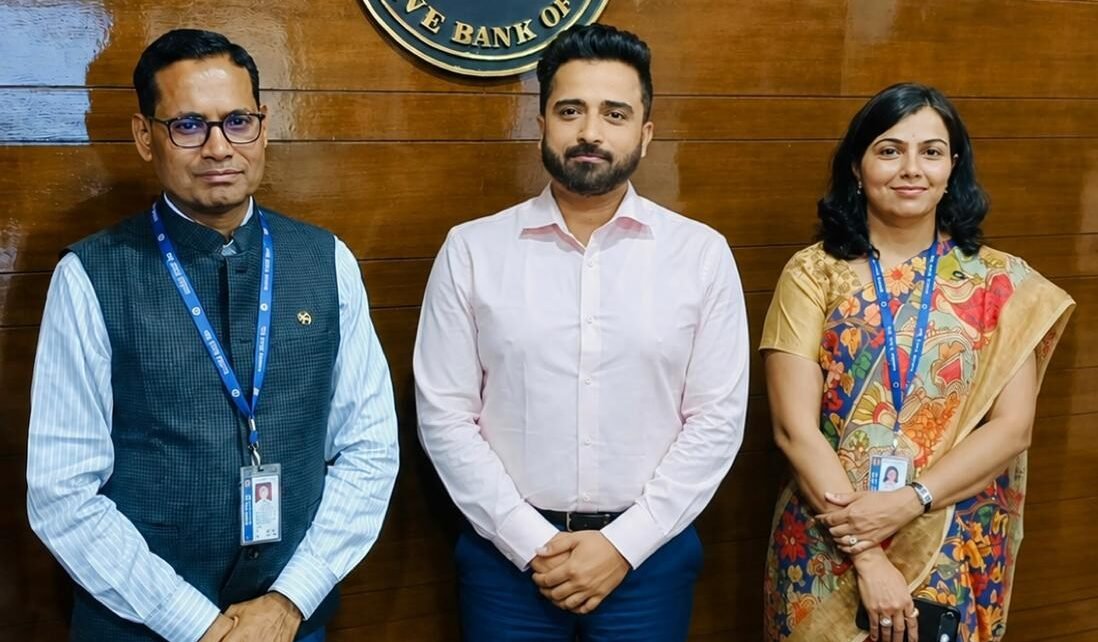
Jammu: The on Wednesday strongly advocated for enhanced financing support to Micro, Small and Medium Enterprises (MSMEs) and greater awareness of RBI-backed digital platforms during the 70th meeting of the Empowered Committee on MSMEs for the Union Territories of Jammu & Kashmir and Ladakh.
The Chamber was represented by its Joint Vice President , who raised a range of issues concerning MSMEs, startups, tourism-linked enterprises, handicrafts and small businesses across the Union Territory.
KCC&I highlighted the lack of awareness about the Trade Receivables Discounting System (TReDS), a digital platform regulated by the that enables MSMEs to unlock working capital through invoice discounting with banks and NBFCs in a transparent and collateral-free manner.
The Chamber said TReDS has the potential to improve liquidity by ensuring timely payments against invoices raised on corporates, public sector undertakings and government departments, but noted that awareness among MSMEs in Jammu and Kashmir remains “extremely low”.
Amin said timely awareness about such platforms could have helped businesses better manage the liquidity stress currently being faced by the sector.
KCC&I urged banks, financial institutions and government departments to undertake aggressive awareness campaigns across industrial estates and business clusters.
Responding to the concerns, RBI Regional Director J&K said Udyam Registration is mandatory for MSMEs to avail benefits under various government and RBI-supported schemes, and directed banks to intensify awareness campaigns in collaboration with the Chamber.
The Chamber also raised concerns over low disbursement of loans under the Credit Guarantee Fund Trust for Micro and Small Enterprises (CGTMSE), stating that despite provisions for collateral-free loans, businesses continue to face demands for collateral and complex procedures.
It said loan disbursement levels in Jammu and Kashmir remain lower compared to other regions and called for corrective measures to improve credit flow.
Highlighting rising unemployment, KCC&I stressed the need for easier access to low-interest credit and simplified financing procedures for startups and youth entrepreneurs, urging banks to adopt more flexible and entrepreneur-friendly norms.
The Chamber further flagged rigid banking practices, including excessive reliance on CIBIL scores, and called for a pragmatic approach in dealing with stressed MSME accounts, especially in sectors like tourism that have faced repeated disruptions, including after the Pahalgam incident last year.
KCC&I urged banks to avoid coercive recovery practices and advocated for a consultative mechanism involving trade bodies to resolve stressed accounts and NPAs in a dignified manner.
The RBI Regional Director advised banks to engage more closely with KCC&I in addressing issues related to collateral requirements and MSME distress.
The Chamber also highlighted the importance of the Emergency Credit Line Guarantee Scheme (ECLGS 5.0) and sought wider awareness and easier access to the scheme for distressed businesses.
It further pointed to high rejection rates under self-employment schemes such as PM SVANidhi, PM Mudra Yojana and PM Vishwakarma Yojana, attributing them to procedural delays, documentation hurdles and lack of awareness, and called for a comprehensive review to ensure eligible beneficiaries are not deprived.
KCC&I urged banks to conduct regular financing reviews of industrial clusters and ensure equitable credit flow to employment-generating sectors, while appealing to MSMEs and entrepreneurs to complete Udyam Registration to avail benefits under various schemes.