
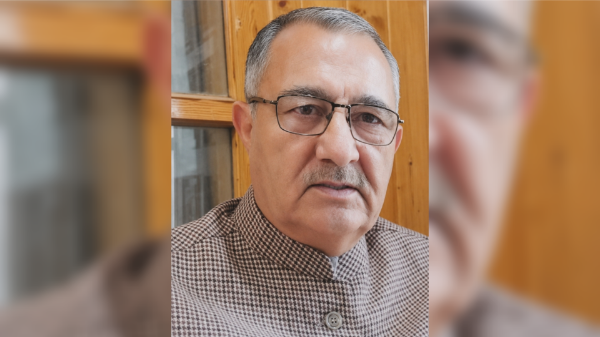
SRINAGAR — Ahmad Ayaz, renowned social activist, columnist and national television panelist, has expressed serious concern over repeated reports of rotten, unhygienic and potentially harmful meat being supplied and sold in different parts of Kashmir, saying that such incidents raise serious questions about administrative accountability, business ethics and public health.
Referring to the recent detection of an allegedly rotten meat consignment at Budgam Railway Station, Ayaz said the recurrence of such incidents, despite previous seizures and public assurances, calls into question the effectiveness of the administration’s monitoring and enforcement mechanisms.
He observed that the issue should not be viewed merely as a food safety violation or unfair trade practice, but as a matter of honesty, moral responsibility and respect for human life. Knowingly supplying or selling rotten meat for commercial gain is not just an irregularity in business; it is a serious breach of public trust and an unacceptable compromise with the health and safety of unsuspecting consumers.
Ayaz said repeated incidents demand more than temporary outrage, occasional inspections and seizure of consignments. The administration must establish how such material enters the market, identify the suppliers and distribution networks involved, examine possible regulatory failures and disclose the action taken in previous cases. The recurrence of such incidents also warrants an impartial review of the existing enforcement system.
He stressed that administrative responsibility extends across the entire supply chain, from procurement and slaughter to transportation, storage and retail distribution. Food safety authorities, veterinary departments and other concerned agencies must ensure regular inspections, proper certification, surprise checks and effective prosecution of those found responsible. Accountability, he said, must extend to every level, irrespective of the commercial influence or position of those involved.
Ayaz also highlighted the social responsibility of religious scholars and leaders, observing that their role should go beyond issuing statements or demanding strict action whenever such incidents come to light. Given their considerable influence and public respect, religious scholars have an important responsibility to promote honesty, integrity and ethical conduct in everyday life, particularly in business and commercial dealings.
He said religious teachings place considerable emphasis on honesty in trade, transparency, fair dealing and the prohibition of deception. These principles, he added, must not remain confined to religious discourses but should be reflected in the everyday conduct of traders and the wider community.
“The question is not simply whether our religious scholars condemn the sale of rotten meat after an incident comes to light. The more important question is how consistently they have been using their influence, religious platforms, sermons and community engagement to inculcate honesty and ethical business practices among people. Religious leadership carries a responsibility beyond ritual observances and religious pronouncements. It must also contribute to building a morally conscious and socially responsible society,” Ayaz observed.
He further maintained that the concept of halal cannot be understood narrowly in terms of the method of slaughter alone. Cleanliness, safe handling, proper storage and prevention of contamination are equally important. Food that has become rotten or unsafe cannot be justified merely by referring to its original source or method of slaughter.
Ayaz said traders and their associations must also introspect and take a clear stand against individuals who compromise public health for financial gain. The actions of a few dishonest individuals, he said, should not bring disrepute to the entire trading community. Civil society organisations, community representatives and the media must also maintain sustained scrutiny instead of allowing such issues to fade from public attention once the immediate controversy subsides.
Calling for greater transparency, he urged the administration to make investigation findings and action taken in previous cases public, enabling people to know whether those responsible were prosecuted and corrective measures introduced. He emphasised that enforcement must be evidence-based, impartial and consistent, without selectively targeting small vendors while allowing larger suppliers to escape scrutiny.
“A society cannot claim to be guided by strong moral and religious values while remaining indifferent to dishonesty, deception and practices that endanger human lives. Nor can an administration claim effective governance merely by announcing seizures and registering cases after such incidents occur. The real test is whether we can prevent their recurrence,” Ayaz said.
He called upon the administration, religious scholars, traders, civil society organisations and the wider community to examine their respective responsibilities, stressing that the issue requires collective introspection and sustained action.
Concluding his remarks, Ayaz said Kashmir needs more than another round of public outrage and official assurances. It needs an accountable administration, ethical business practices, responsible religious leadership and a society unwilling to tolerate the exploitation of public trust or the compromise of human health for commercial profit.