
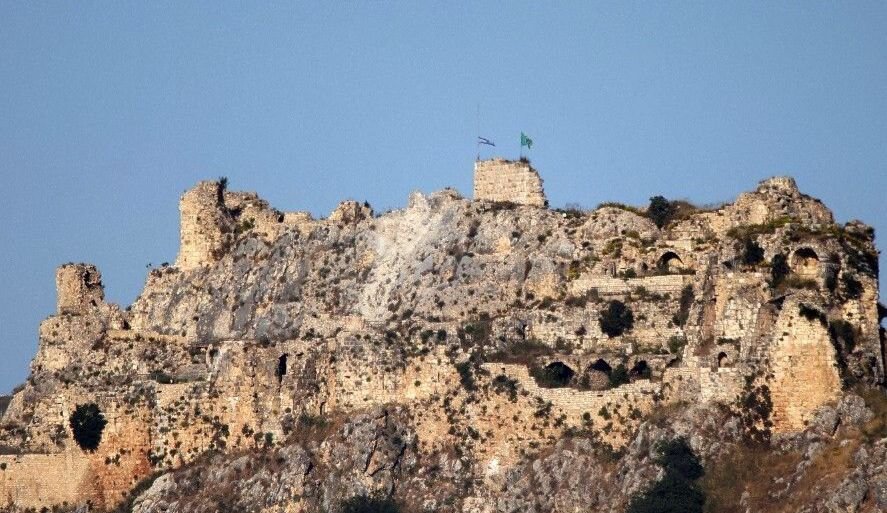
JERUSALEM — Israel’s flag flew over the medieval fortress on Beaufort in Lebanon on May 31, as the Israeli military warned Lebanese civilians to evacuate a large area of the south of the country ahead of stepped up ground operations.
Shelling was audible and smoke rose from the surrounding area as the invading army’s banner was seen above the castle, which Israeli forces famously used as a base during their previous two-decade long occupation.
Israeli Defence Minister Israel Katz said Israel’s troops captured the historic stronghold, which commands sweeping views of southern Lebanon, as they expanded their ground operations, which Lebanon’s prime minister has condemned as a “scorched-earth” policy.
“Forty-four years after the heroic Battle of Beaufort, and on this day commemorating the soldiers who fell in the First Lebanon War (1982), our troops have returned to the summit of Beaufort and once again raised the Israeli flag there,” Katz said in a social media post.
“Under Prime Minister Benjamin Netanyahu and my direction, the IDF expanded the operations in Lebanon, crossed the Litani River, and captured the Beaufort Ridge – one of the most important strategic points for defending the communities of the Galilee and safeguarding the security of our forces,” he said.
The push to Beaufort came as the Israeli military issued a sweeping evacuation order to areas south of the Zahrani River, north of the Litani and around 40km from the border, warning that it was targeting the Iran-backed Hezbollah armed group.
“Anyone present near Hezbollah elements, facilities or combat means endangers their life. Any building used by Hezbollah for military purposes may become subject to targeting!” Israel’s military spokesman, Colonel Avichay Adraee, said in a social media post.
‘Collective punishment’
“A significant number of IDF ground soldiers commenced offensive operations aimed at expanding the Forward Defence Line. The operation is currently expanding to additional areas,” the Israeli military said.
Lebanon’s Prime Minister Nawaf Salam accused Israel on May 30 of pursuing a “scorched-earth policy and collective punishment” in the south, urging a halt to the fighting and warning it is “destroying towns and villages, and forcing their inhabitants into exile”.
Military delegations from both countries held security talks in Washington on May 29, with more US-brokered negotiations planned next week.
Salam said the outcome of the negotiations was “not guaranteed”, but called them “the least costly path for our country and our people”.
A truce to halt the fighting between Israel and Hezbollah officially began on April 17, but has never been observed. Both Israel and Hezbollah accuse each other daily of violating the ceasefire and justify their attacks by the other’s alleged breaches.
A US statement issued after Israel-Lebanon talks on May 29 made no mention of the truce, but said the “productive military-to-military discussions” would inform next week’s political meeting.
Hezbollah vehemently opposes the direct talks.
On May 30, it said it launched multiple attacks targeting northern Israel and clashed with Israeli soldiers in southern Lebanon.
‘Drone death’
Hezbollah said it was confronting Israeli forces around the outskirts of the towns of Zawtar al-Sharqiyah, Yohmor al-Shaqif and Dibbine, adding that the troops “had not yet succeeded in taking control of the towns”.
The Israeli military said more than 25 projectiles were launched from Lebanon towards Israel on May 30, while air alert sirens sounded in the northern cities of Karmiel and Safed for the first time since the ceasefire, according to the army’s Home Front Command.
Public broadcaster Kan aired footage shared on social media showing rockets falling into the sea off Israel’s Nahariya, near the border, sending beachgoers fleeing.
The Israeli army also said on May 31 that one of its soldiers was killed a day prior by a Hezbollah explosive drone, bringing to 25 the number of Israeli military deaths in Lebanon since early March.
The Lebanese Health Ministry says Israeli attacks have killed more than 3,371 people since March 2. — (AFP)